Options for Foam Flooring
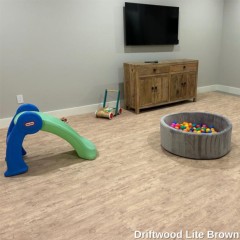
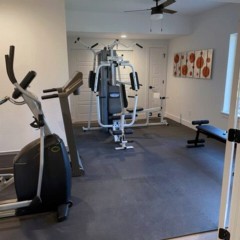
When customers are searching for an affordable, comfortable, and durable type of flooring to use at home or in a business location, foam flooring is a popular choice. It protects kids who may fall while playing or working on athletics. It’s comfortable for martial arts or yoga studios as well as home gyms and basement media rooms.
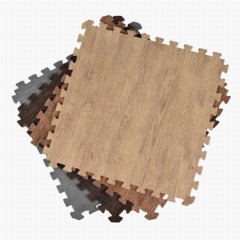
At Greatmats, we offer thick foam floors with soft cushioning, thin foam floors that are comfortable while delivering sure footing, and everything in between. We also offer bright colors, faux wood-grain options, and similar designs. If you’ve never considered buying easy-to-install, anti-fatigue foam flooring, now is the perfect time to start. (Your aching knees and hips will thank you!)
Styles of Foam Flooring
We offer two primary styles of foam flooring: tiles and mats.
Foam Tiles
Interlocking
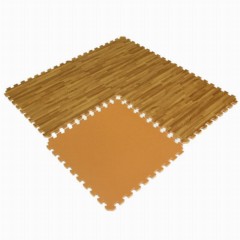
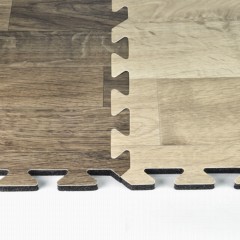
foam tiles have an easy-to-manage size for a DIY installation. Many use puzzle-style edges that you can connect without adhesive. If you ever need to pull up a damaged tile and replace it, this is easy to do with interlocking foam tiles.
Foam flooring kits feature enough tiles to cover a specific area. For example, if you have a 10-by-10-foot bedroom or a 20-by-20-foot trade show booth, our kits contain all the pieces needed to cover that particular space.
Foam Mats
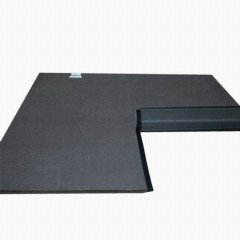
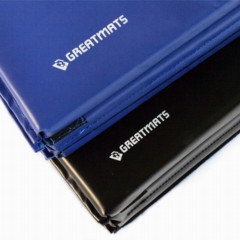
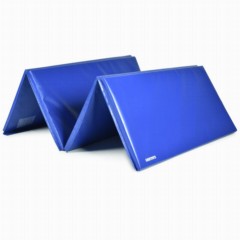
Folding foam mats offer cushioned foam inside a vinyl cover that protects it and ensures a sure footing. The vinyl connects the mat’s four or five foam panels, allowing you to fold them accordion-style for storage or a greater thickness.
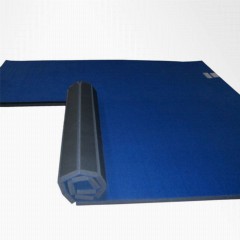
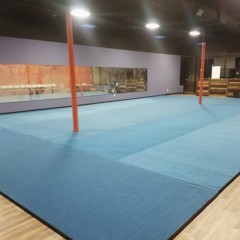
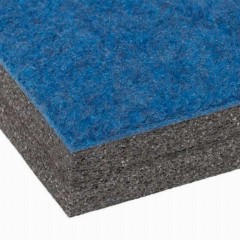
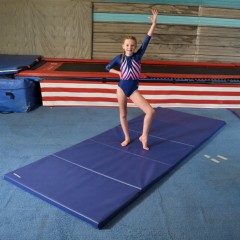
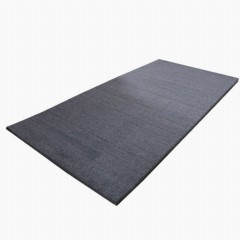
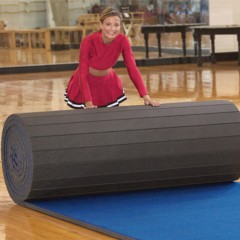
Roll-out foam mats have a vinyl or carpet layer on top with the foam layer attached to the back. The top layer ensures a sure footing for cheerleading, gymnastics, martial arts, and other workouts. The foam reduces the risk of soreness or injuries for athletes who fall.
Anti-fatigue foam mats are made to protect the lower body joints of people who must stand, such as salespeople at a trade show or athletes working out.
Common Foam Flooring Material Combinations
Several different types of foam can be made into flooring. Each material has certain use cases where it offers the greatest benefit.
EVA Foam
EVA foam flooring is one of the most common materials. EVA, short for ethylene-vinyl acetate, is a closed-cell foam that is waterproof and offers a durability and cushioning level similar to rubber.
Foam-PVC Blend
We offer a few foam-PVC flooring products that are primarily for industrial and commercial locations. Many of these products provide ergonomic benefits for people who must stand and work most of the day. They often resist oil and chemical spills, too.
Vinyl-Bonded Foam
Vinyl-bonded foam is often found in roll-out mats. The vinyl top layer provides a good footing for gymnasts or cheerleaders practicing tumbling runs, while the cushioned foam bottom layer protects them in case of a fall.
Carpet-Bonded Foam
Carpet-bonded foam roll-out mats have similar use cases to vinyl-bonded foam mats, but they replace the vinyl top layer with carpeting that provides traction and durability.
Some carpet-bonded foam products are available in an interlocking tile format, too.
Vinyl-Covered Foam
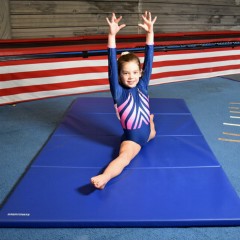
Vinyl-covered foam flooring mats are most commonly found as fold-out mats. The vinyl outer layer connects multiple sections of foam, making it easy to fold the mat’s sections onto themselves for storage or to deliver extra thickness for cheerleading or gymnastics skill building.
Common Thicknesses for Foam Floors
Our foam flooring is available in several different thicknesses. Thinner mats provide less cushioning but tend to deliver a sure footing. Thicker mats do a better job protecting athletes against falls. Some common thickness measurements for our foam floors include:
- 3/8 inches
- 1/2 inches
- 9/16 inches
- 5/8 inches
- 3/4 inches
- 1 inch
Common Sizes for Foam Floors
No matter how much coverage area you need from your foam flooring product, we have options that can help.
Single Pieces
If you want to assemble a floor from individual pieces, we have several useful sizes available.
Our 1-by-1-meter and
2-by-2-foot foam tiles are some of the most popular options we offer. These sizes are easy to maneuver into place during a DIY installation, and they cover a large space quickly. Many of these products use an interlocking, puzzle-style edge to simplify installation.
We also offer mats made to cover larger spaces, such as 4-by-8-foot folding foam mats.
Kits
If you want to cover a specific area, we offer kits that contain all the pieces for a certain room size. One of our most common kit sizes is 10-by-10 feet, but other options are available.
Custom Foam Floors
Custom foam floors are available to fit the exact requirements you have for your flooring. For example, some people need
foam underlays to fit underneath another type of flooring to provide some cushioning.
Some custom foam floors offer reversible designs, meaning they have different colors on each side. Others may have a custom size or shape that helps with certain types of athletics, such as foam wedge mats for helping with somersaults and walk-overs.
Benefits of Foam Flooring
Some of the key benefits of our foam flooring products include:
- Many colors and design styles are available.
- Interlocking foam mats are easy to install.
- Puzzle-style edges fit tightly without needing glue.
- Foam provides a temperature barrier against a cold basement floor.
- Cushioned foam makes ground-based workouts more comfortable.
- Some foam flooring is waterproof and resists staining.
- Slip-resistant textures are available.
- Anti-fatigue cushioned floors protect lower body joints.
- Border strips for some products provide a finished edge.
- They’re durable enough for constant foot traffic.
- Some designs can support exercise equipment or small weights.
- Carpet and vinyl top layers offer durability and traction.
- Most products are easy to clean.
Use Types for Foam Flooring
Customers use our foam floors for many different purposes in both residential and commercial applications.
Residential Applications
Some of the most common ways our residential customers use our foam flooring include:
- Basement floors
- Home gyms
- Media rooms
- Game rooms
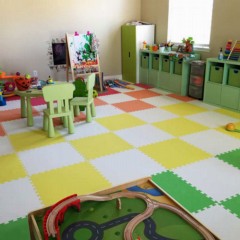
- Kids’ playrooms
- Kids’ bedrooms
- Animal stalls or kennels
- Home training areas for martial arts, cheer, gymnastics, and more
- Workbench areas
- Kitchens
Commercial and Specialty Applications
Commercial and industrial customers use our foam flooring in a variety of situations, including:
- Martial arts studios
- Yoga studios
- Cheerleading studios
- Gymnastics studios
- Trade shows
- Exhibit booths
- Retail locations
- Indoor playgrounds
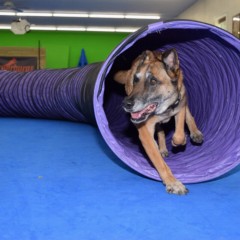
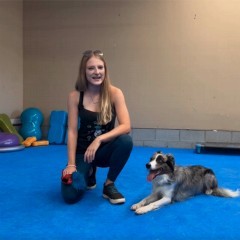
- Dog training and agility facilities
- Aquatic areas (like splash pads or pool surrounds)
- Locker rooms
- Assembly lines
- Commercial kitchens
- Welding areas
Foam Flooring Q&A
What is foam flooring made of?
Foam flooring is made of a few different types of material formulas. EVA, or ethylene-vinyl acetate, is a closed-cell foam with a softness and flexibility similar to rubber. PE, or polyethylene, is a closed-cell foam that rebounds quickly to its original shape after absorbing an impact. PU, or polyurethane, is an open-cell foam that generates the maximum level of cushioning.
How do you install foam floor tiles, mats, and rolls?
To install foam floor tiles, mats, and rolls, you generally don’t need to use glue. To install tiles, just connect the interlocking edges tightly by hand. Foam rolls and mats can be laid flat during the activity and rolled up or folded up afterward for storage or movement to a new location.
How do you clean different types of foam flooring?
To clean different types of foam flooring, start by sweeping away dry debris. (You could use a gentle vacuum, too.) For stubborn stains, you can damp mop them with a basic household floor cleaner and water. Avoid saturating the materials with liquid.
How do you cut foam floor tiles?
To cut foam floor tiles, mark the desired cut line with a pen or marker. A sharp utility knife should be sharp enough to penetrate the foam. Use a series of shallow cuts to work through thicker foam. Use a straight edge to keep the knife blade on the line.
Are foam mats waterproof?
Some
foam mats are waterproof, but it depends on the design. A closed-cell foam mat offers waterproof protection, while an open-cell product does not. You can usually recognize closed-cell foam mats because they offer a firmer configuration than open-cell options.




 $655 /Tile You Save 47%$1.69/sqftShips Out in 1-3 Working Days Free ShippingShop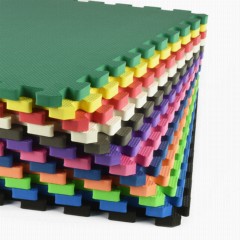


 $749 /Tile You Save 49%$1.93/sqftShips Out in 1-3 Working Days Free ShippingShop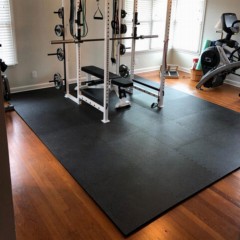
 $825 /Tile You Save 41%$2.13/sqftShips Out in 1-3 Working DaysShop


 $870 /Tile You Save 43%$2.24/sqftShips Out in 1-3 Working Days Free ShippingShop


 $3314 /Each You Save 19%$8.54/sqftShips Out in 4-6 Working DaysShop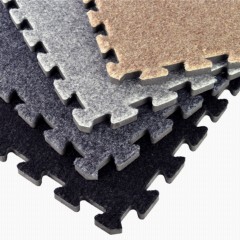


 $1140 /Tile You Save 41%$2.94/sqftShips Out in 1-3 Working Days Free ShippingShop



 $1,20952 /Roll You Save 22%$4.80/sqftShop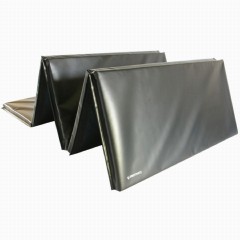

 $23840 /Mat You Save 28%$5.96/sqftShips Out in 1-3 Working DaysShop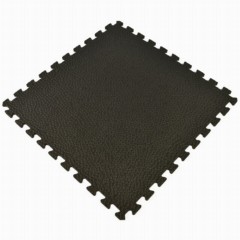
 $715 /Tile You Save 38%$1.84/sqftShips Out in 1-3 Working Days Free ShippingShop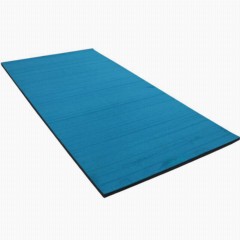


 $32999 /Mat You Save 5%$6.60/sqftShips Out in 3-5 Working Days Free ShippingShop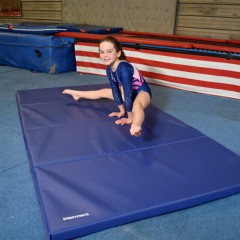

 $2290 /Tile You Save 23%$2.13/sqftShips Out in 1-3 Working DaysShop