Options for Gym Floor Tiles
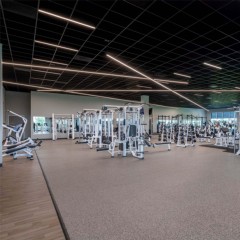
Whether you’re creating a workout space in a garage or basement at home, or you need to lay out floors at a commercial athletic facility, the right gym floor tiles can help you create the perfect surface. At Greatmats, we offer many products that work as floor tiles for a gym, allowing you to cover a large space at a price that’ll fit your budget.
You can select among several different materials for your gym flooring tiles, based on the use case you have in mind. We offer multiple different flooring thicknesses, depending on whether you need extra cushioning, added durability, or an equal mixture of both. Workouts are hard, but selecting your flooring doesn’t have to be when you rely on Greatmats.
Types of Gym Flooring Tiles
The design of the gym flooring tiles will affect the way the installation works.
Interlocking and Snap-Together Tiles
Many gym floor tiles have an interlocking edge that slides together without needing to use glue. This simplifies the installation process, allowing many people to do a DIY job. It also allows you to assemble and disassemble the tiles as often as you want.
Some interlocking tiles have a hidden connection system that maintains the clean look of the layout on top while securing the tiles underneath. Others may use a puzzle-style edge that simplifies the connection, but where the jigsaw edges might be visible.
Straight-Edge Tiles
Straight-edge tiles work well for flooring installations designed to be more permanent. They require glue to hold the tiles in place. After the installation, you’ll have a series of clean lines that are visible in the final layout.
Materials and Thicknesses of Gym Floor Tiles
At Greatmats, we offer several different thicknesses and materials in our gym floor tiles, helping you match the design of the tile to the planned use case.
Materials for Gym Flooring Tiles
We offer several different materials you can use for your gymnasium or workout space flooring, including:
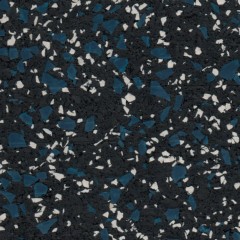
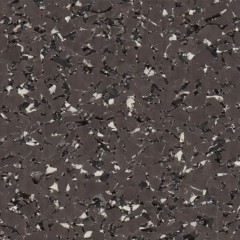
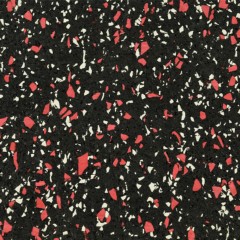
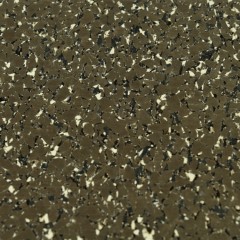
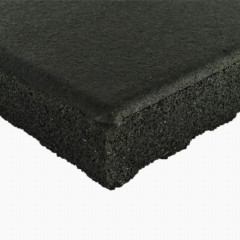
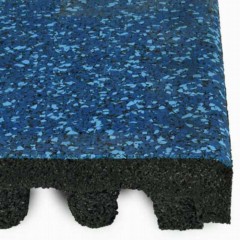
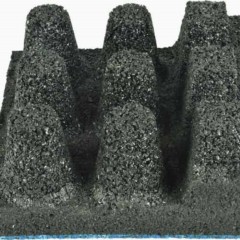
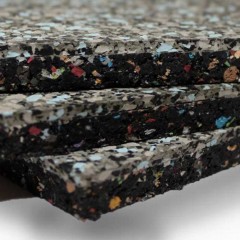
- Rubber: Don’t think of rubber gym floor tiles as limited to black colors only. They’re available in multiple colors when you select the large Domination Rubber Tiles or the thick UltraTile Weight Floor Tiles, yet they maintain the level of durability you want. The budget-friendly thin Gmats Rubber Floor Tiles use an interlocking edge for ease of installation.
- Polypropylene Plastic: Firm polypropylene plastic tiles are ideal for use as flooring for ball sports like tennis, pickleball, basketball, and more. Our DunkStar BaseCourt Outdoor Tiles pop together easily and include perforations that drain water quickly. For an indoor court, our VersaCourt Wood Grain Court Tiles have a firm plastic interlocking base with a vinyl top layer that looks like wood.
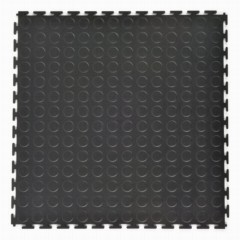
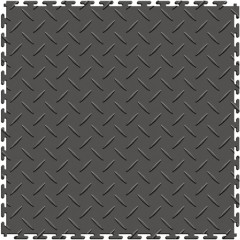
- PVC Plastic: PVC plastic gym floor tiles offer some cushioning properties like foam, but they’re also highly durable, similar to rubber. You can install our StayLock Bump Top Tiles over low-pile carpet and maintain a stable flooring for workouts. For an upscale design that you can leave in place after the workout, our StayLock Orange Peel Tiles are a popular choice.
- Foam: EVA foam tiles are lightweight and easy to install, yet they have the durability and firmness needed to withstand exercise equipment. Our Gym Floor Workout Fitness Tiles have a textured surface to reduce the risk of slips.
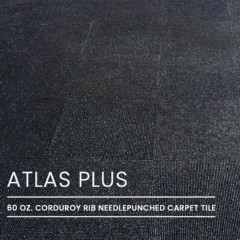
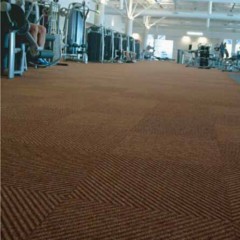
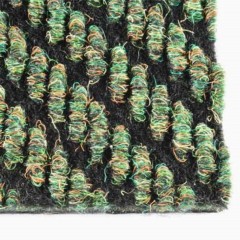
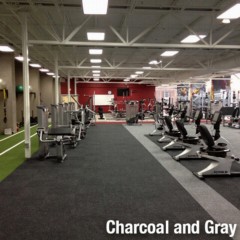
- Carpet: Don’t dismiss carpet as a gym floor tile option. Carpet squares look great, prevent slips, and often provide moisture resistance. Our Fit Weave Gym Carpet Tiles stand up to tough conditions and are a budget-friendly choice for a gym floor.
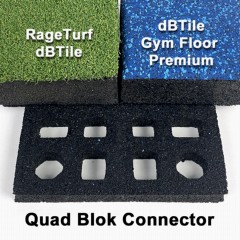
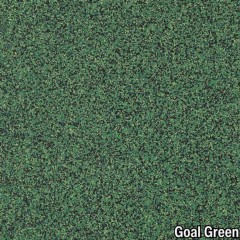
- Artificial Turf: Artificial turf gym floors work nicely for indoor or outdoor installations. They have a cushioned backing that protects the athletes’ leg joints. Our RageTurf UltraTiles have a thick rubber base that maximizes shock absorption.
- Cork/Rubber: A cork/rubber gym floor tile mixture yields an extremely durable, wear-resistant flooring with maximum cushioning properties. The FlexeCork Cork/Rubber Tiles have multiple color and thickness options that yield an aesthetically pleasing layout.
Thickness Options in Floor Tiles for a Gym
Thicker tiles provide a greater level of protection for the subfloor if you’re using weightlifting equipment or exercise machines. They can also deliver a higher level of cushioning to protect the lower body joints of the athletes from injury.
Thinner tiles cost less and are easier to install, but they don’t offer the same level of protection that thicker tiles deliver. The most common thickness measurement options available for gym floor tiles include:
- 1/4 inch
- 8 mm (5/16 inch)
- 3/8 inch
- 1/2 inch
- 1 inch
Features and Benefits of Floor Tiles for Gyms
Some of the top features and benefits of various gym flooring tiles include:
- Durability to stand up to exercise equipment
- Some products support weightlifting
- Waterproof against spills and sweat
- Slip-resistant surface
- DIY installation is possible
- Some products use recycled materials
- Works as flooring for temporary installations
- Cushioning to protect lower-leg joints
- Some configurations absorb noise
- Seams remain connected when placed under stress
- Easy to clean and maintain
Use Types for Gym Floor Tiles
Our fitness center gym floor tiles are extremely versatile, giving you multiple different use case options, including:
- Home gyms and commercial gyms
- Weight rooms
- Anti-fatigue flooring
- Aerobic workouts
- Ergonomic cushioning
- Exercise equipment support
- Yoga workouts
- Martial arts workouts
Gym Floor Tiles Q&A
How often should gym tiles be cleaned?
The
recommended frequency for cleaning your gym tiles depends on the amount of use they see. Daily sweeping and weekly deeper cleaning is a general cleaning schedule recommendation, but you might need more or less frequent cleanings based on usage.
How do you install gym floor tiles?
The technique for
installing gym floor tiles depends on the design. Rubber tiles with a Quad Blok connector slide into a grid piece that secures each piece. Other tiles may have hidden edges that interlock or visible puzzle-style edges that pop together.
How do you cut rubber gym tiles?
To
cut rubber gym tiles to fit against a wall, place a 2x4 piece of lumber under the tile along the cut line. Use a straight edge to guide your utility knife when cutting. The 2x4 helps the cut line fall open, simplifying finishing the cut.
What is the best home gym flooring over concrete?
The
best home gym flooring to go over concrete is usually rolled rubber, which provides some cushioning and protects the concrete from damage from exercise equipment. PVC plastic and foam tiles are also popular options.
What are the advantages of interlocking gym flooring?
The
advantages of interlocking gym flooring include the ease of installation, versatile usage options, and the ability to move them to any location. Should one tile suffer damage, you can remove and replace it with a new one inside the layout.




 $3141 /Tile You Save 19%$7.85/sqftShop

 $3019 /Tile You Save 20%$7.55/sqftShop


 $3263 /Tile You Save 20%$8.16/sqftShop


 $3694 /Tile You Save 20%$9.24/sqftShop

 $4853 /Tile You Save 15%$12.13/sqftShop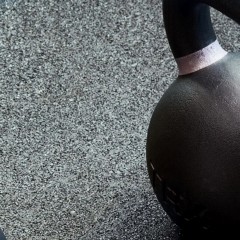


 $5356 /Tile You Save 14%$13.39/sqftShop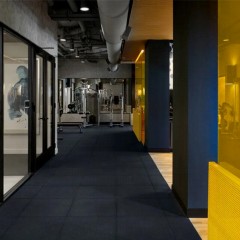


 $4454 /Tile You Save 15%$11.14/sqftShop
 $15366 /Carton You Save 15%$4.76/sqftShop



 $15845 /Carton You Save 14%$4.91/sqftShop


 1 reviews
•2 Colors
$8043 /Carton You Save 27%$3.87/sqftShop
1 reviews
•2 Colors
$8043 /Carton You Save 27%$3.87/sqftShop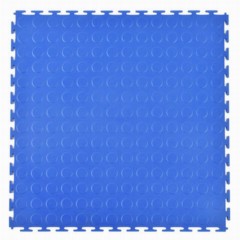


 $9595 /Carton You Save 27%$4.61/sqftShop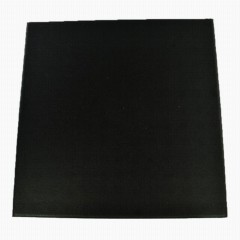
 $7024 /Tile You Save 20%$17.56/sqftShop


 $10701 /Tile You Save 19%$26.75/sqftShop


 $9546 /Tile You Save 20%$23.87/sqftShop


 $9754 /Tile You Save 19%$24.39/sqftShop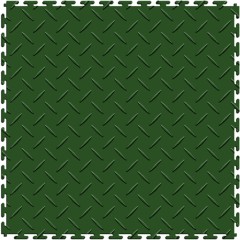


 $9595 /Carton You Save 27%$4.17/sqftShop

 $8043 /Carton You Save 27%$3.87/sqftShop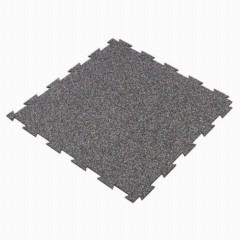


 $19634 /Tile You Save 20%$20.69/sqftShop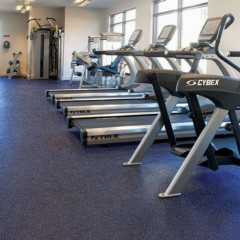


 $26595 /Carton You Save 14%$4.91/sqftShop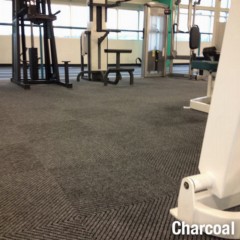


 $19766 /Carton You Save 16%$3.66/sqftShop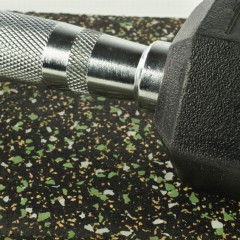


 $10414 /Tile You Save 20%$12.62/sqftShop





