Playground Surfacing Comparison


Related Product: Sterling Playground Tile 95% Premium Colors 3.25 Inch x 2x2 Ft.
Playground Surfacing Comparison
Playground surfaces vary greatly from composition to safety and compliance to cost and maintenance. While it’s always best to refer to the manufacturer’s instructions for installation and maintenance instructions for your specific product, we’ve shared some general information and maintenance guidelines for each surfacing type below.Engineered Wood Fiber
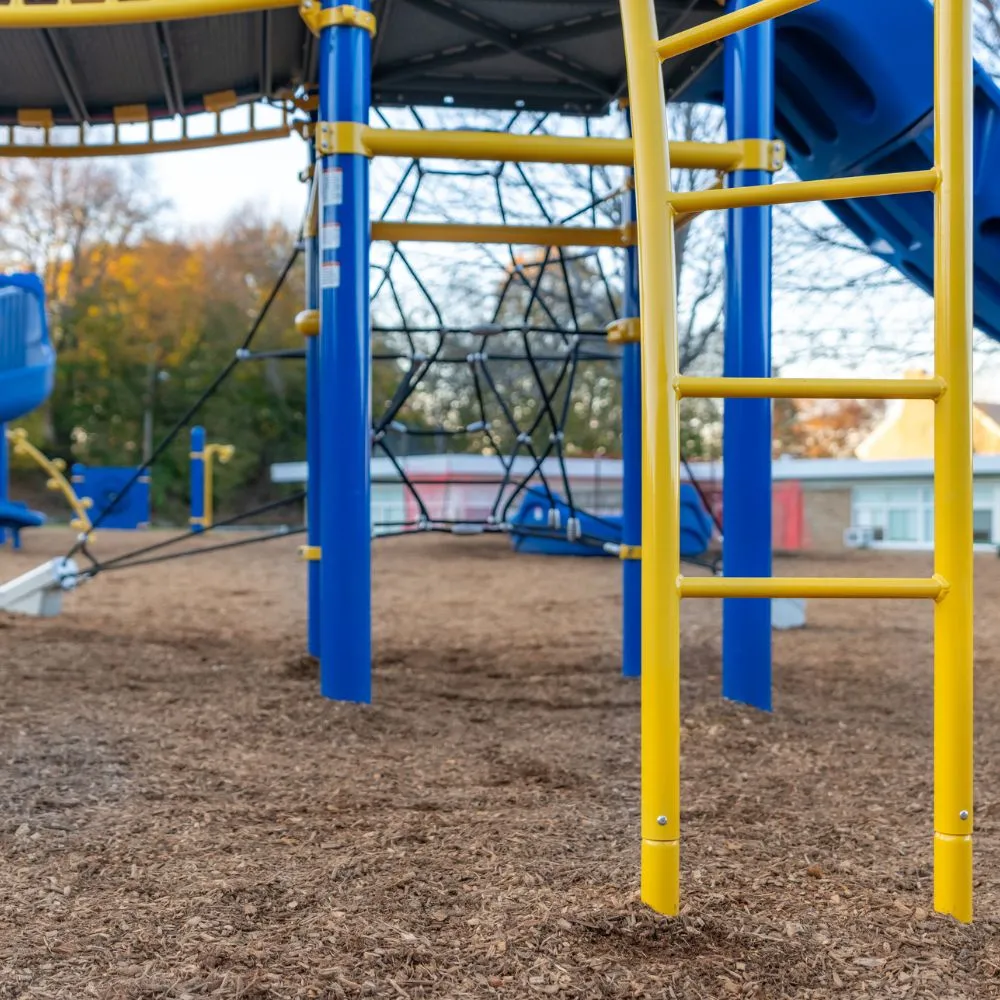
Engineered wood fiber products tend to be cost-effective and eco-friendly. These loose-fill wood fibers create cushioned surfaces and are often an excellent fit for playspaces with a natural theme.
Engineered wood fiber can be ADA compliant when it’s properly specified and maintained under ASTM F2075 and F1951, but keep in mind that this loose fill can also easily be dislodged or worn down. Daily maintenance is likely required to keep the fill evenly dispersed, especially when used around high-traffic areas like a swing or slide.
Sand
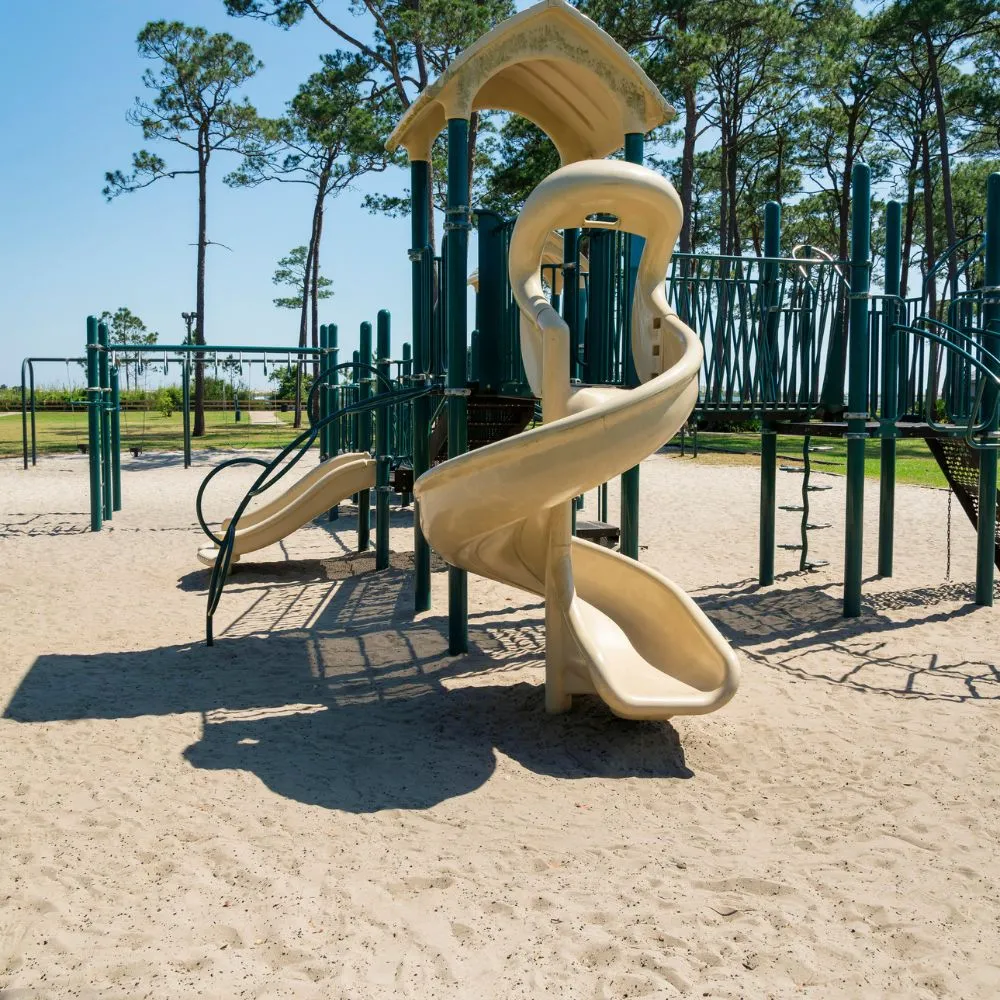
Sand is a popular option for playgrounds. It’s low in cost and easily sourced, though it’s naturally somewhat dirty and requires the same careful maintenance as engineered wood fiber.
Sand is not ADA accessible, which will limit your playground. It is also typically only appropriate for use in areas with very low fall heights, such as playgrounds with very low equipment.
Poured-in-Place Rubber
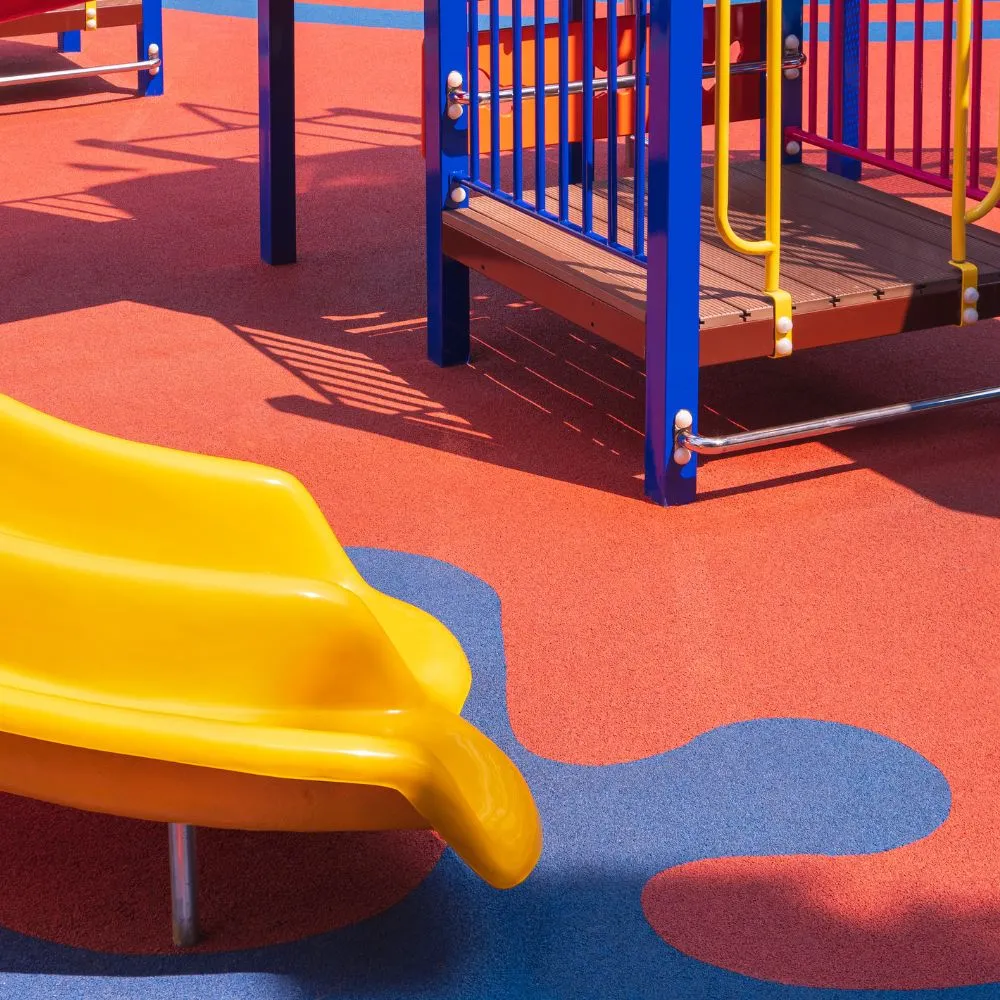
Poured-in-place rubber surfaces, in which rubber is poured and then left to set as your playground’s surface, offer several advantages. It creates a seamless installation that’s ideal if your playground sees significant precipitation. Additionally, the rubber can be poured at customizable thicknesses, so it can meet critical fall height requirements. Often, this rubber is engineered to support critical fall heights of up to 12 or even 13 feet.
There are many advantages to poured-in-place rubber, but it does come with significant initial costs. Those costs will increase if you’re looking for a thicker installation for a greater critical fall height.
Rubber Mulch
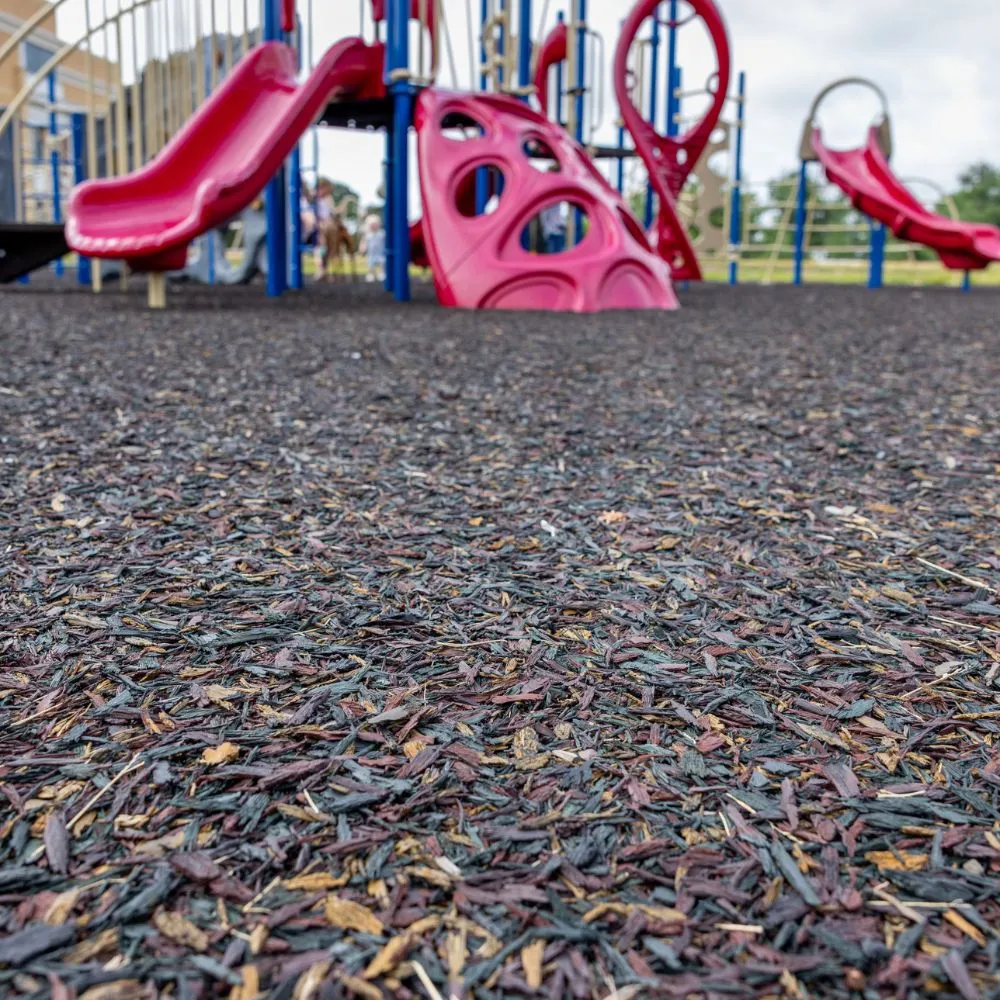
Rubber mulch is another loose-fill option with some additional benefits. This mulch delivers high shock absorption for increased safety and comfort. It also offers superior fall protection when compared to loose fill options like sand.
Rubber mulch is also highly durable and delivers a long-lasting performance, though it does require regular maintenance to keep it evenly distributed across the surface.
Rubber Tiles
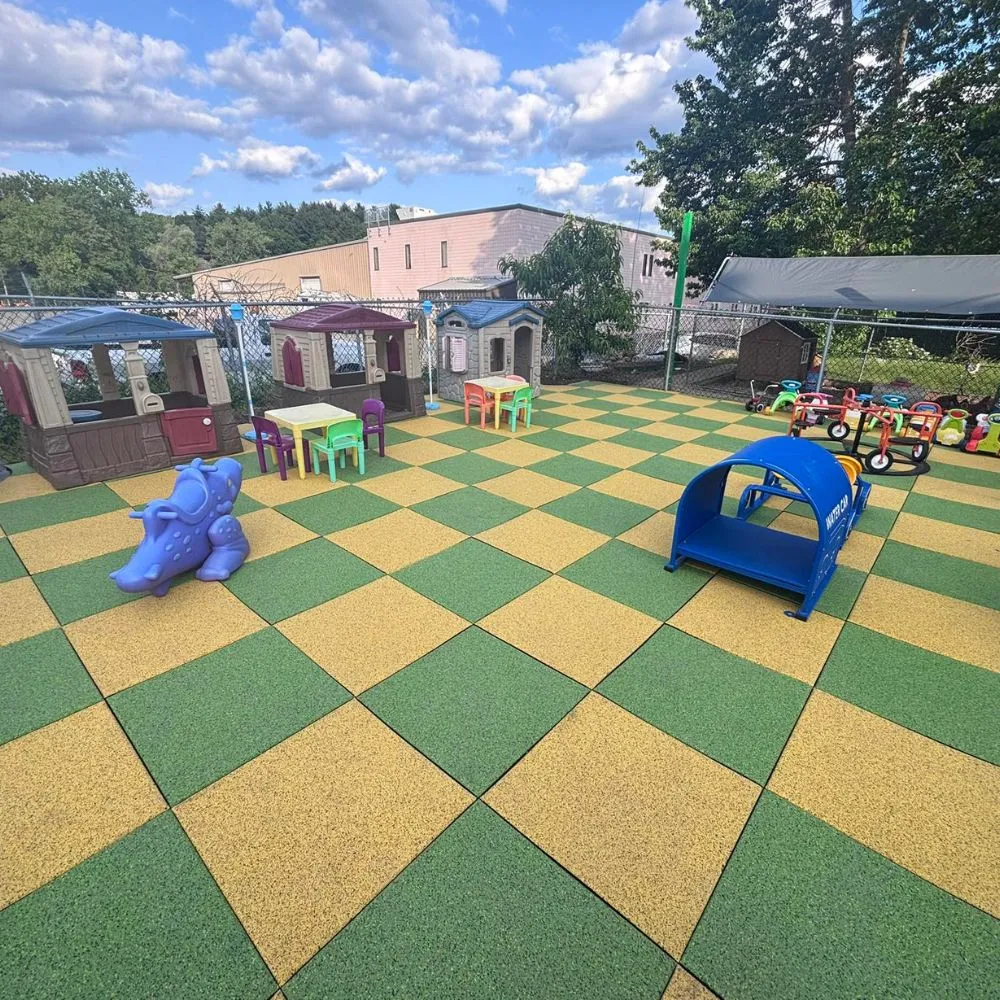
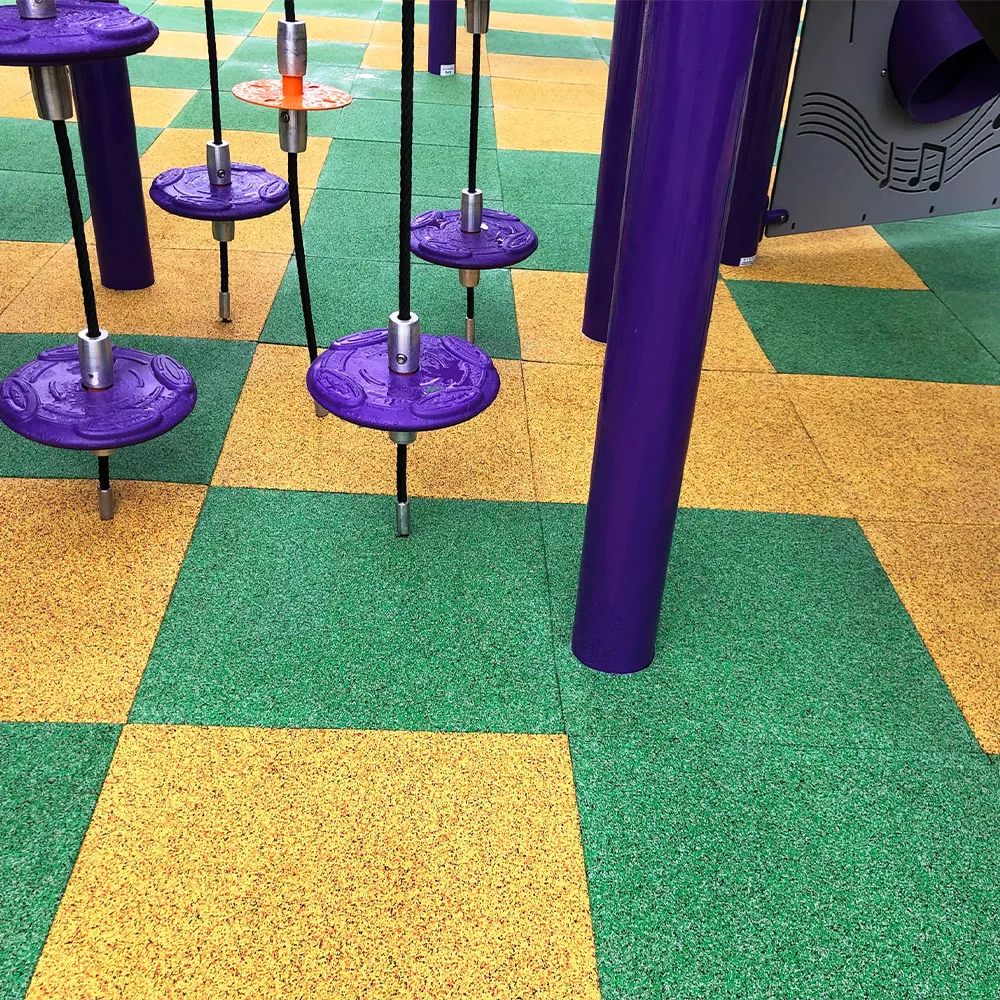
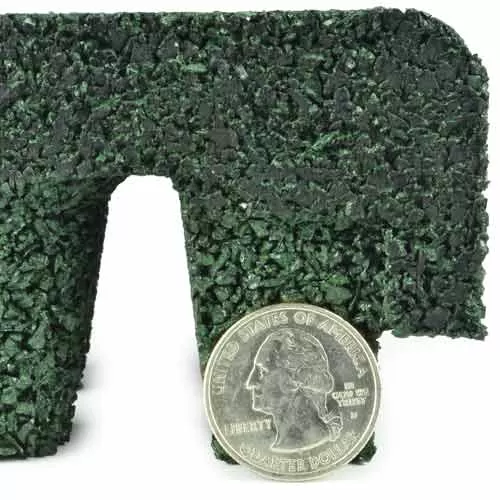
Rubber tiles create a flat, even surface that can be ADA-compliant. These modular tiles have known fall-height ratings based on their thicknesses. For example, 2.25-inch tiles are rated to approximately 4 feet, while 2.75-inch tiles are rated to about 6 feet. Rubber tiles have many benefits, but they tend to be a more expensive option.
The Sterling Playground Tile is a 2.25-inch tile with a 4-foot fall height rating. It’s highly durable and features a lifetime warranty, plus an EPDM wear layer that helps prevent the black or colored surface from rubbing off, which parents appreciate.
The Max Playground Rubber Tile has a 4- to 5-foot ASTM rating depending on the installation method and substrate. It can be installed with Quad Blok to help cushion falls, and it’s crafted from 92% recycled rubber, making it an eco-friendly flooring option.
Rubber Mats
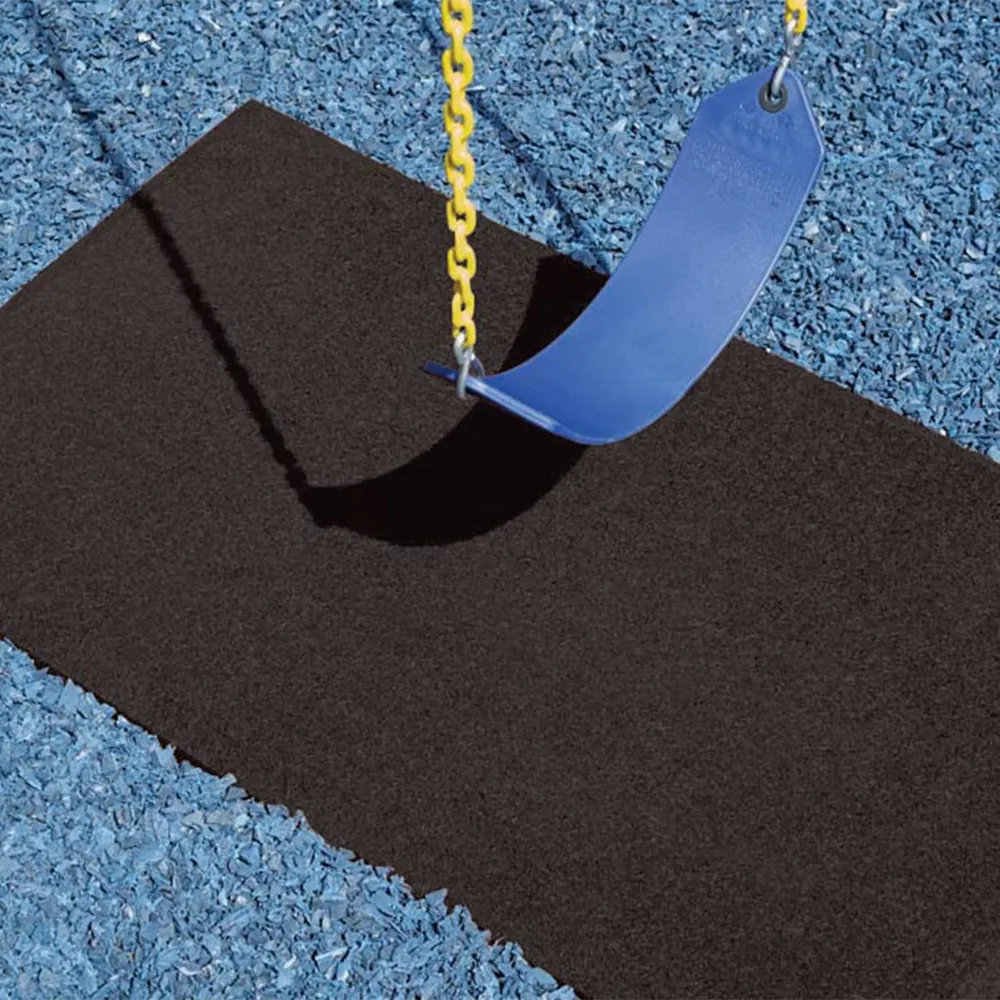
Rubber wear mats can be placed in high-wear zones, like under swings and slides. These mats provide targeted protection to help prevent rutting and the displacement of loose fill in these areas. Rubber mats can also be installed on top of poured-in-place or tiled surfaces, providing extra protection against wear.
The Playground Swing Set Mat not only offers extra protection but also features a 4-foot fall height rating for enhanced safety. It features beveled edges for a clean look, and its heavy-duty construction helps it stay securely in place over time.
Artificial Turf
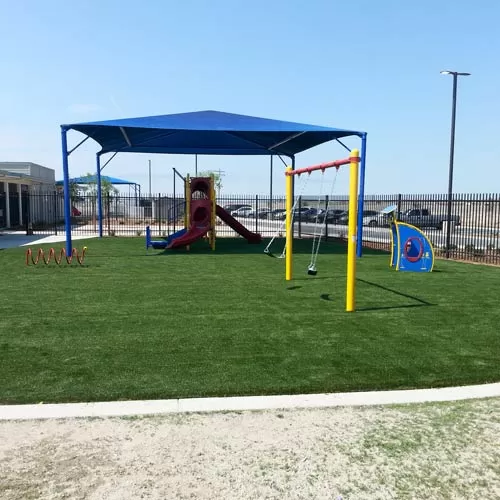
Artificial turf with playground padding provides a natural look, but also creates consistent cushioning if you install it with a shock-pad system. Turf provides great drainage, ideal for areas that see lots of precipitation. It’s a low-maintenance and durable option, but it is also one of the more expensive choices.
The Play Time Playground Green Turf features a natural look and a great feel underfoot. The turf is paired with a 2.25-inch foam base layer for extra cushion, and it is ASTM certified to 8 feet. ChargeGuard is built into the blades of the grass, helping to resist static electricity buildup.
PVC Plastic Tiles
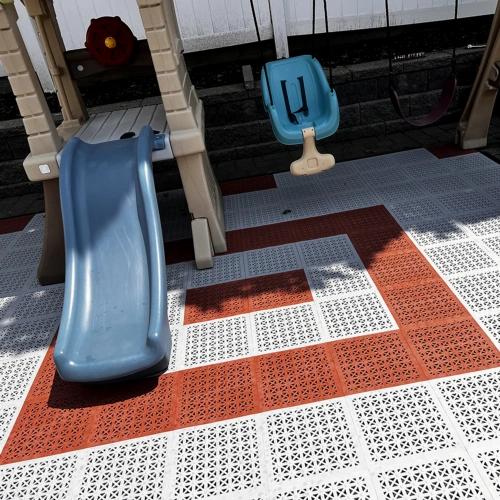
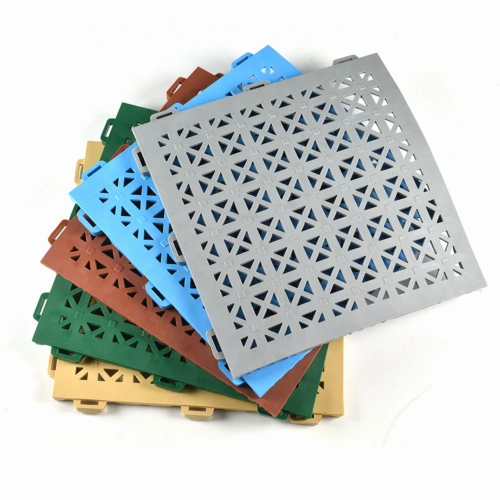
PVC plastic tiles are modular, perforated tiles that are sometimes suitable for playgrounds that receive lighter use. Also designed for use on rooftops and patios, these tiles offer mild fall height protection but generally aren’t ideal for playgrounds with equipment. The tiles do offer the benefit of being easy to install and remove as needed, and they’re moderately priced.
The StayLock Tile Perforated Colors is a durable tile designed for outdoor use, and it can be used in some playgrounds. The tile features a 20-inch fall height rating, and it’s slip-resistant even when it’s wet for increased safety. The flexible PVC is comfortable underfoot, and the tiles interlock securely.
Foam Tiles
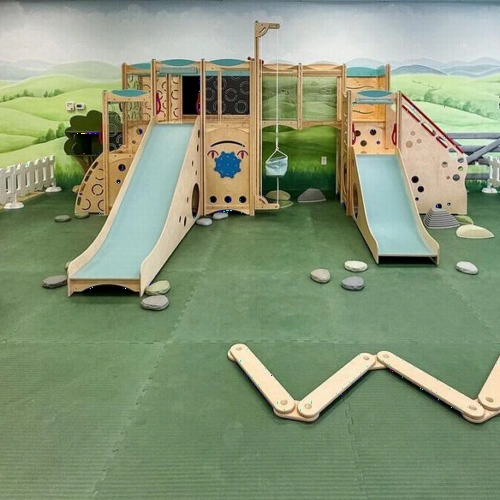
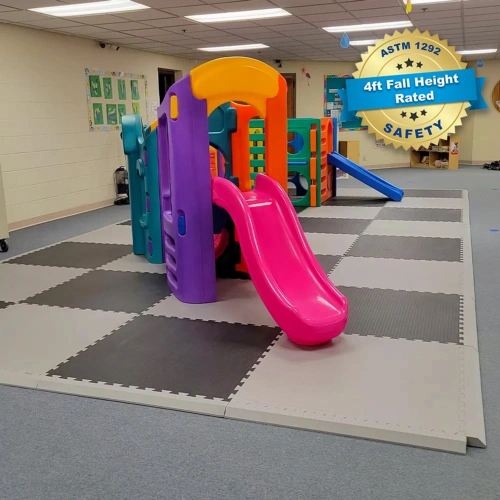
Foam playground tiles are only suitable for indoor playgrounds. EVA foam is soft and lightweight, and it provides a very comfortable surface to walk, crawl, or kneel on. These tiles are ideal for indoor playrooms and daycares and have a moderate price point.
Indoor Playground Flooring Tiles are fall height rated for up to 4 feet and are waterproof, so they’re easy to clean. The tiles feature a no-skin-burn tatami texture for safety, and their puzzle-style edges make them very easy and quick to install.
How to Choose Playground Surfacing Products
The above playground surfacing comparison serves as a starting point, but you’ll need to evaluate each product for your specific project’s needs. Keep in mind that ASTM F1292 determines a product’s critical fall height, so be sure to ask any manufacturer for their F1292 documentation to verify the product is suitable for your playground.To determine the best product for your needs:
- Determine the maximum equipment fall height on your playground, which will tell you the ASTM critical fall height the product must meet. Make a list of surfaces that meet or exceed that rating at a depth that your playground can reasonably accommodate.
- Evaluate ADA priorities. When building an inclusive playground, design the space to be ADA accessible. That means avoiding loose fill surfaces and choosing products like tiles or pour-in products.
- Consider maintenance. Evaluate your maintenance staff's availability. If staff have limited time or capacity to maintain a playground, then look for a low-maintenance option like rubber tiles or a pour-in product.
- Request documentation before buying. Be sure to request fall height test reports, warranty details, installation guides, and any other materials before deciding to purchase a product.
- Consider the look you want to achieve. The flooring needs to match the aesthetic and goals of your project. For example, padded turf offers a natural look that may be popular depending on your playground design. PVC and rubber tiles are available in numerous colors that can coordinate with your playground’s colors.
Playground Material Comparison Chart
| Features | Rubber Mulch | Rubber Tiles or PIP | Padded Synthetic Turf | Wood Mulch | Sand | Pea Gravel |
|---|---|---|---|---|---|---|
| Unitary or Loose Fill | Loose Fill | Unitary | Unitary | Loose Fill | Loose Fill | Loose Fill |
| Advantages | Impact Absorption, Low Cost, DIY | Impact Absorption, Easy to Clean, Color & Design | Impact Absorption, Natural Look, Easy to Clean | Impact Absorption, Natural Look | Low Cost, DIY | Low Cost, DIY |
| Disadvantages | Uneven Surface, Can't be Cleaned | High Initial Cost | High Initial Cost | Uneven Surface, Can't be Cleaned | Uneven Surface, Can't be Cleaned | Uneven Surface, Can't be Cleaned |
| ADA Compliant | Can Be - But Less Wheelchair Friendly | Yes | Yes | Can Be - But Less Wheelchair Friendly | No | No |
| Fall Height | Up to 10 Foot with 6 Inches of Mulch | Up to 10 Foot | Up to 8 Foot | Up to 7 Foot with 9 Inches of Mulch | Up to 4 Foot with 9 Inches of Sand | Up to 5 Foot with 9 Inches of Gravel |
| Color | Limited Colors | Many Color Options | Natural Look or Some Colors | N/A | N/A | N/A |
| Initial Cost | Low | Highest | High | Low | Low | Low |
| Ongoing Maintenance & Cost | High | Low | Low | High | High | High |
If you have any questions, contact the Greatmats customer service team. We’re happy to provide additional information about our playground products and help you find the best flooring solution for your needs.