Options for Gymnastics Mats
When trying to keep young athletes safe in a gymnastics studio, at
home, or at a school as they learn new skills, the right gymnastics mats are important. These mats provide cushioning against falls, giving kids the confidence they need to try new skills without worrying about injuries. Some specialty gymnastics mats are even used to teach specific new skills, like walkovers.
At Greatmats, we have more than 150 different gymnastic mat products, including some new designs that help students progress faster. We have multiple sizes, thicknesses, custom colors, and cushioning levels to perfectly fit your needs. All the flips, handsprings, vaults, and beam routines that draw gasps from the crowd during competitions start with training safely in the studio or at home using the right mats.
Best Styles and Types of Gymnastic Mats
At Greatmats, we carry several different kinds of gymnastic mats to fit the specific needs of your gymnasts.
Folding
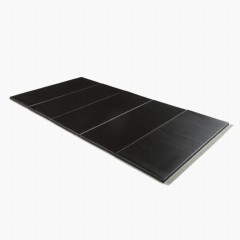
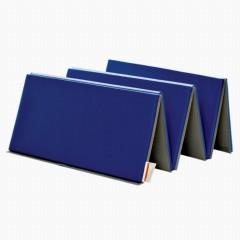
Folding mats have four or five sections connected by a vinyl cover. You can lay the mat out flat for maximum coverage area or stack the sections to yield more cushioning over a smaller area.
Landing
Landing mats are slightly thicker than standard gymnastics mats, providing stability and cushioning for athletes who are learning skills where they’ll land on their feet.
Roll
A
roll mat is ideal for practicing floor exercise tumbling runs. These mats have a vinyl or carpet surface with foam attached to the underside. They can be up to 42 feet long, making them especially versatile.
Crash
Foldable and non-fold
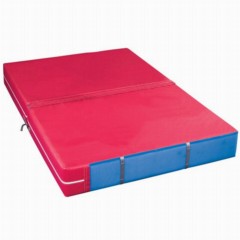
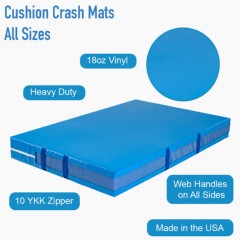
crash mats provide a large, soft landing area. These mats can be several inches in thickness for maximum cushioning.
Wedge
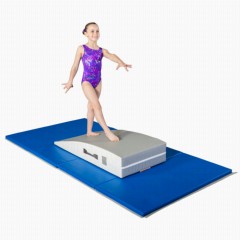
Wedge mats, also called cheese or incline mats, have a shape that resembles a wedge of cheese when viewed from the side. The inclined surface helps young students learn how to do somersaults and walkovers before they move to a flat area.
Octagon
Octagon mats have an eight-sided shape that provides support as the gymnasts learn back-walkovers and similar skills. The instructor holds the gymnast’s body along the mat while slowly rolling it to help the gymnast go over the top.
Pole Pad
If the gymnastics studio, school workout area, or home workout area has support posts near where the gymnasts will be practicing, wrap the poles in our pads to reduce the risk of injuries if an athlete loses control and crashes into the pole.
Wall Pad
For workout areas where collisions with the walls are possible, mount our wall pads to reduce the risk of injuries. These pads securely fasten to the wall and provide a far safer cushioned space than an unforgiving wall.
Gymnastic Mat Materials
Our gymnastics mats feature three primary designs.
Carpet-Bonded Foam
Carpet-bonded foam mats are primarily available in roll designs. They’re used for practicing tumbling runs. The carpet top layer gives the athlete traction, while the connected foam layer underneath yields cushioning for lower body joints and protection against falls.
Vinyl-Covered Foam
Most of our gymnastics mats have a vinyl-covered foam design. The vinyl cover provides some stability for the gymnasts while protecting the foam on the interior. Vinyl is easy to wipe clean after each use. We offer many different color options in the vinyl material, letting you personalize it to match your studio or school colors.
Denim-Covered Foam
Denim-covered foam is used in one of our crash mats, providing a highly durable cover to protect the thick foam inside.
Features and Benefits of Gymnastic Mats
Some of the key benefits you’ll receive with our gymnastics mats include:
- Maximum cushioning in case of falls
- Sturdy materials to help with specialty skill building
- Many products made in the United States
- Larger mats have sewn-in handles to simplify moving them
- Large coverage areas
- Various thicknesses for building different skills
- Durable vinyl protects the foam
- Some mats can be connected
- Custom colors are available
- Easy to clean and maintain
- Foldable designs simplify storage and transport
Gymnastics Mat Use Types
Greatmats’ customers use our gymnastics mats in several different situations, including:
- Gymnastics studios
- Gymnastics competitions
- Cheerleading studios
- Home workout spaces
- Schools
- Martial arts studios
- Exercise areas
Gymnastics Mats Q&A
How do you clean gymnastics mats?
To
clean gymnastics mats properly, you should remove dirt and debris from the vinyl surface. Use a safe cleaning liquid and lightly spray it on the vinyl cover. Then use a microfiber cloth or mop on the vinyl to wipe it clean. Avoid scrubbing too hard.
What size mat should I use for gymnastics?
The
proper size of mat to use for gymnastics depends on the types of workouts being done. When younger gymnasts are using the mats, for example, smaller products will be suitable. If you’re using specialty skill-building mats, such as wedge shapes or octagon shapes, it’s important to match their sizes to the age of the gymnasts.
How thick should a gymnastic mat be?
The
proper thickness for a gymnastics mat depends on the workouts. To catch gymnasts who may fall from the balance beam or bars, crash mats measuring several inches in thickness may be necessary. For mats used in basic ground-based skill building, a couple of inches of thickness should be sufficient.
What are gymnastics mats made of?
Gymnastics mats are made of a foam core material that absorbs impact energy and immediately bounces back to the original shape. Most mats have a vinyl cover that protects the foam and helps it retain the desired shape. Some specialty mats may use firm foam to ensure they hold their shape, as they’re used for body support instead of cushioning.
What is a hook-and-loop fastener?
A
hook-and-loop fastener attempts to work like a reusable type of tape. It has one fabric section with tiny hooks and a second fabric section with tiny loops. When you press the two sections together, the hooks slide into the loops and hold the sections together, even when placed under stress. You can then pull them apart later.




 $1,57320 /Mat You Save 4%$21.85/sqftShop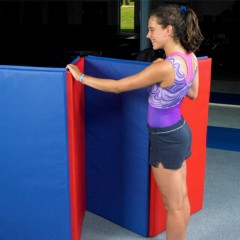


 $37039 /Each You Save 14%$15.43/sqftShop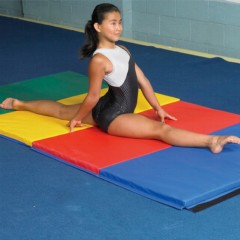




 $25420 /Mat You Save 5%$10.59/sqftShop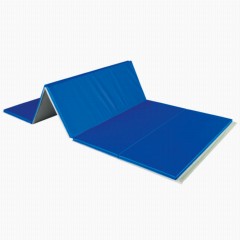


 $1,04872 /Mat You Save 20%$4.16/sqftShop





